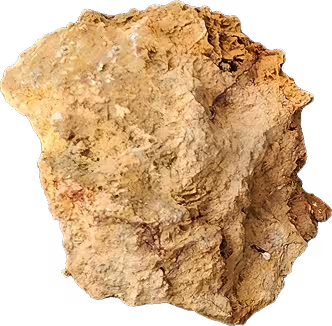
Case Study / Arizona, USA / Au-Cu IOCG
An old mining district returned to with modern tools
A century-dormant Arizona Au-Cu district was re-read with modern field tools and narrowed, in ten days, to two high-priority drill-ready targets and one additional target for follow-up.
10 days
Field Window
4
SENIOR GEOLOGISTS
600+
Soil + Rock-Chip Samples
2
Drill-Ready Targets
01 / Project snapshot
Confirmed by Lab Assays
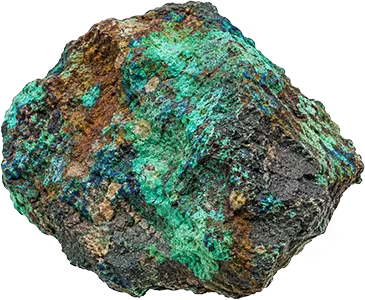
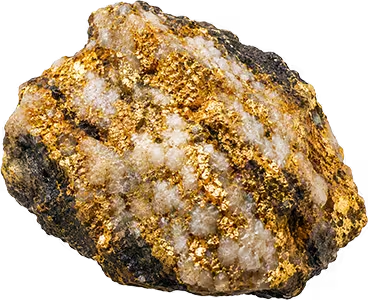
Lab assays received over the following two months confirmed the field interpretation. Several dozen rock-chip samples returned over 10 g/t Au, several dozen ran above 10% Cu, and two samples from historical workings exceeded 100 g/t Au by gravimetric finish.
Location
Arizona, USA
Commodity
Au-Cu, IOCG-style target
Scope
Detailed soil + rock-chip sampling, prospecting, and field-based geochemical screening
Duration / Team
10 days, 4 senior/experienced geologists
Samples collected
600+ (soil + rock chips)
Field analytics
Handheld XRF for in-field triage
02 / Challenge
Speed without sloppiness
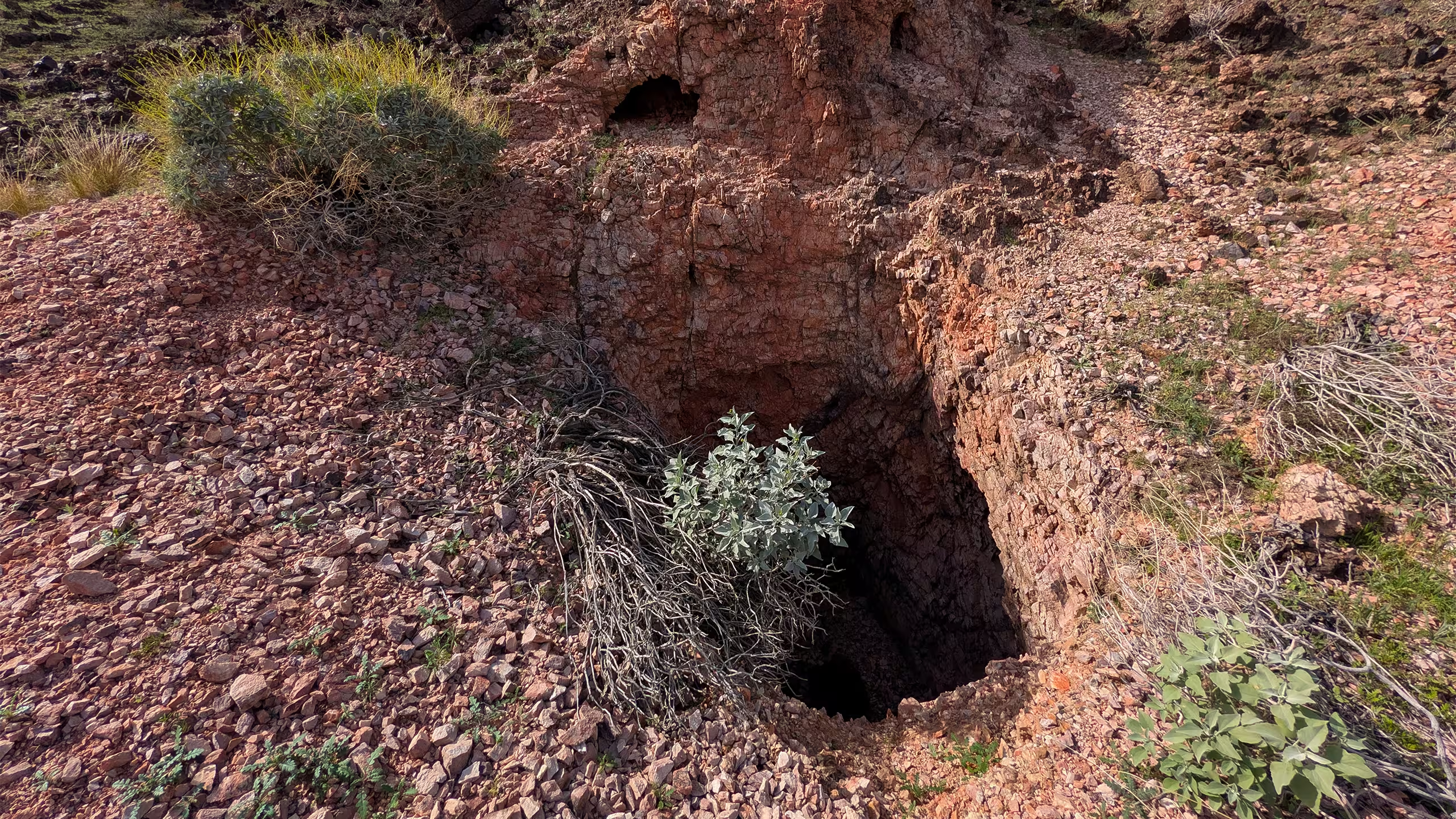
The ground was a historical mining district, worked through the late 1800s and early 1900s and left dormant for over a hundred years. Shafts, adits, prospecting pits, and old trenches were scattered across it. The client had a drill program on the books and a short field window to turn that broad picture into a ranked target list.
The brief was speed without sloppiness. Defensible reasoning, not just a coverage map.

03 / Our approach
Decisions made in the field, not weeks later
01
Ran a detailed soil and rock chip program with targeted prospecting, designed so decisions could be made in the field rather than weeks later in an office.
02
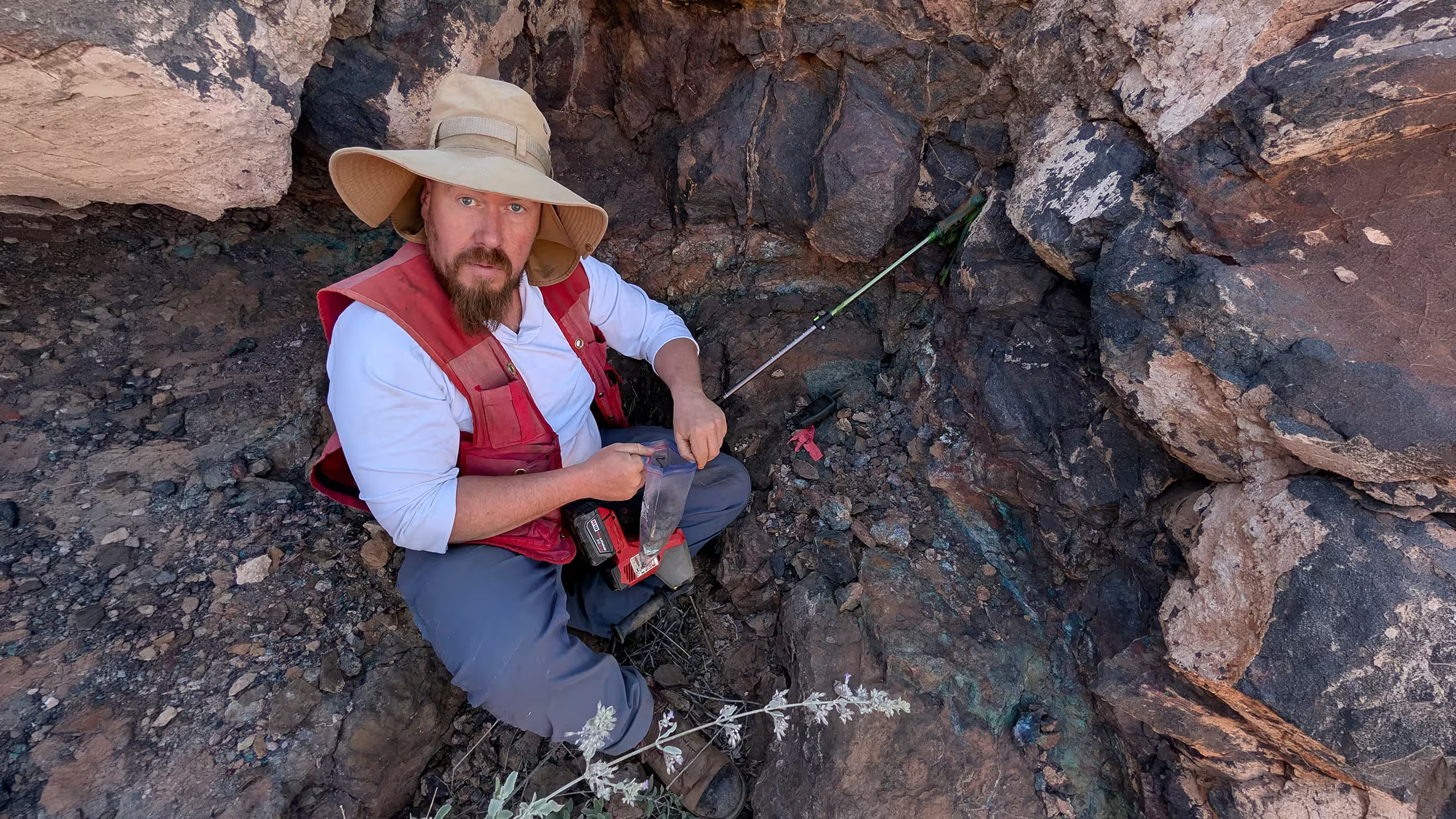
Used handheld XRF for live copper and pathfinder readings on the spot. With lab assays two months out, this is what let the team adjust sampling density in real time, chase the right anomalies, and hand the client a working target picture before the lab results landed.
03
Built geochemical maps and read them against the geology as the program ran, so coherent trends and vectoring patterns drove where the next day’s work went. Selected the lab and analytical suite specifically for IOCG indicators, not a generic package.
04
Worked the historical record into the picture rather than around it. Old mining maps, reports, and the geometry of the workings themselves were folded into the model, and the IOCG framework gave the team a way to read the district that nineteenth-century miners did not have.
04 / What came back
Lab assays confirmed the field reading
The lab assays came back over the following two months and confirmed what the field XRF had suggested. Rock chips returned a high-grade population on both metals. Several dozen samples ran over 10 g/t Au and several dozen over 10% Cu, with two samples high enough to be re-assayed by gravimetric finish, both above 100 g/t Au. Those two came from historical workings, which are selective for high grade by their nature. The broader spread across the 600-sample program is what tells you this is a good mineralised system, not a lucky outcrop or two.
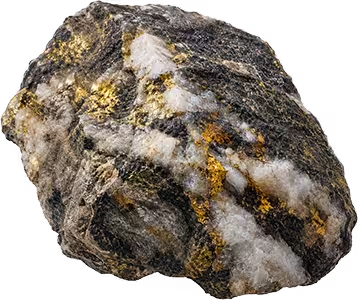
>10 g/t Au
several dozen rock chips
>10% Cu
several dozen rock chips
>100 g/t Au
two samples, gravimetric finish
05 / Outcomes
What the client
walked away with
Clear, defendable targets and a plan the team can act on. The program turned a complex district into a focused set of drill-ready opportunities.
01
2 Drill-Ready Targets
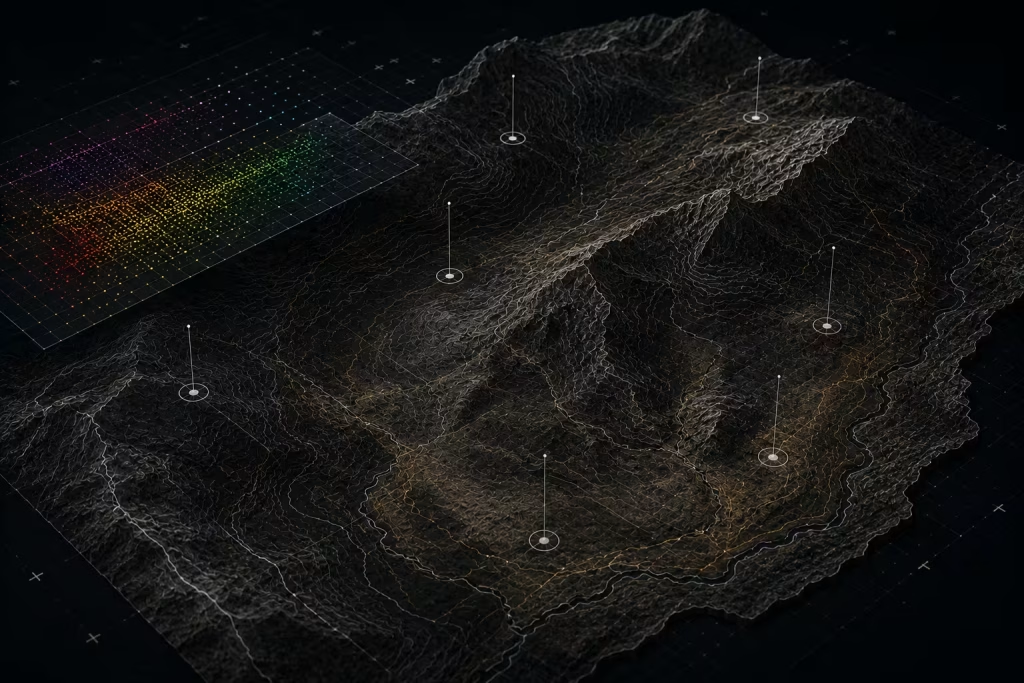
Two high-priority, drill-ready targets defined, each supported by a coherent geochemical footprint and a defensible IOCG rationale.
02
1 Follow-Up Target
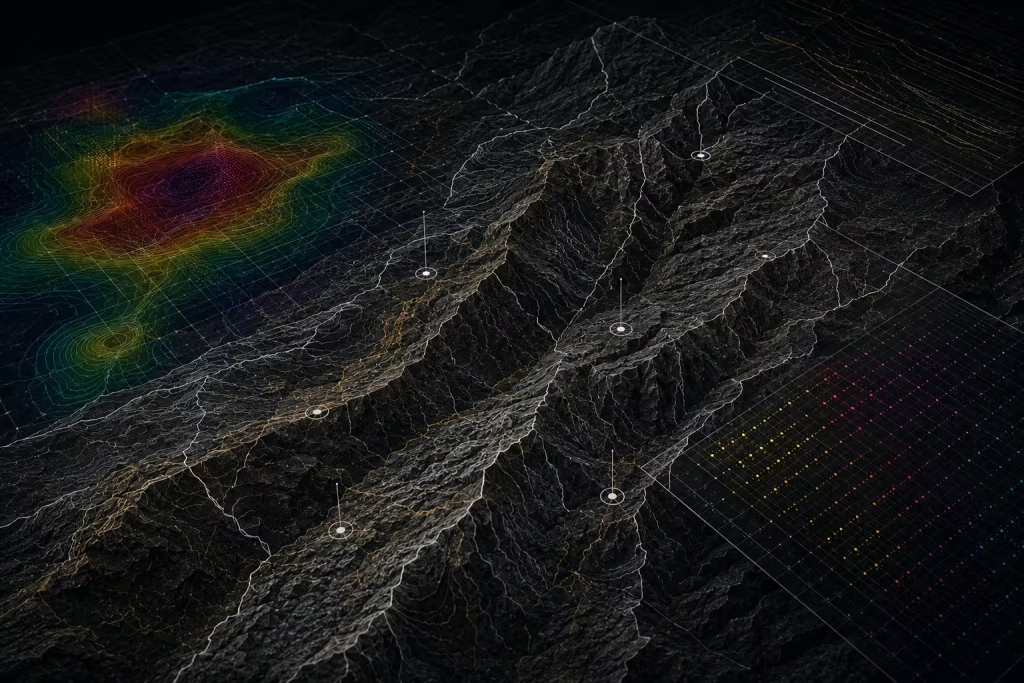
One lower-priority target identified for longer-term follow-up, with sufficient supporting evidence to justify continued evaluation.
03
Drill Planning Framework
A ranked targeting framework prepared to feed directly into drill planning and support efficient allocation of metres.

06 / Deliverables
Handed over, ready to use
Soil and rock-chip sample database (600+ samples)
Target ranking and drill-targeting recommendations
Field geochemical screening results (handheld XRF)
Lab and analytical suite recommendations for confirmatory assays
Interpreted geochemical maps and anomaly interpretation
Target-specific technical summary incorporating relevant historical reporting