Programme Planning and Budgeting
Right scope. Right spend.

Programmes Run by the Geologists Who Designed Them
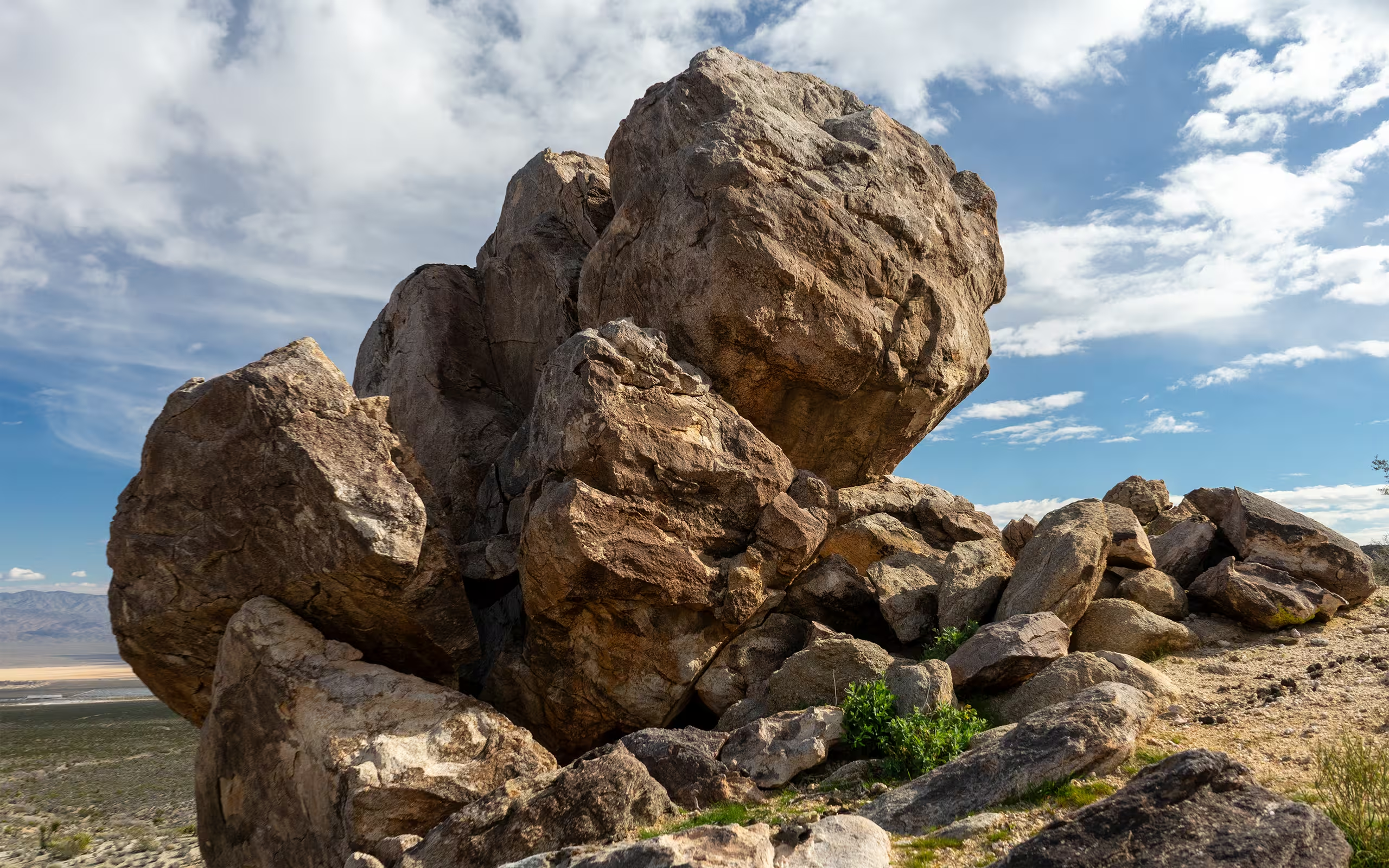
Full programme delivery in the field. We plan, budget, mobilise, and run exploration programmes end to end, or step in to take over a campaign already underway. The geologist who scoped the work is on site when it starts and signs the report when it finishes.
Most exploration programmes are lost not in the targeting and not in the assay results, but in the daily decisions made between them. Where to log the contact. Whether to extend the hole. When to call the lab and push for a re-run. Which anomaly is worth a second traverse and which one isn't. Those decisions happen in real time, on site, and the seniority of the person making them sets the ceiling on what the programme can deliver.
We run programmes the way a major's in-house exploration team would, if it had the bandwidth and the cross-jurisdictional reach. Senior geologists on site. Decisions made against the geological question, not against the rig schedule. QA/QC and data discipline built into the workflow from day one rather than bolted on at the end of the season.
The model works equally well for clients who want a full turnkey programme run end to end, and for clients who already have a campaign underway and need experienced hands to step in and take over.
Every campaign starts with a defensible plan and a budget that ties to it. We scope the work against the geological question being asked, sequence activities to maximise the value of each phase, and build budgets line by line so spend can be tracked against deliverables. The plan stays live throughout the season, with reforecasts when conditions or results change.
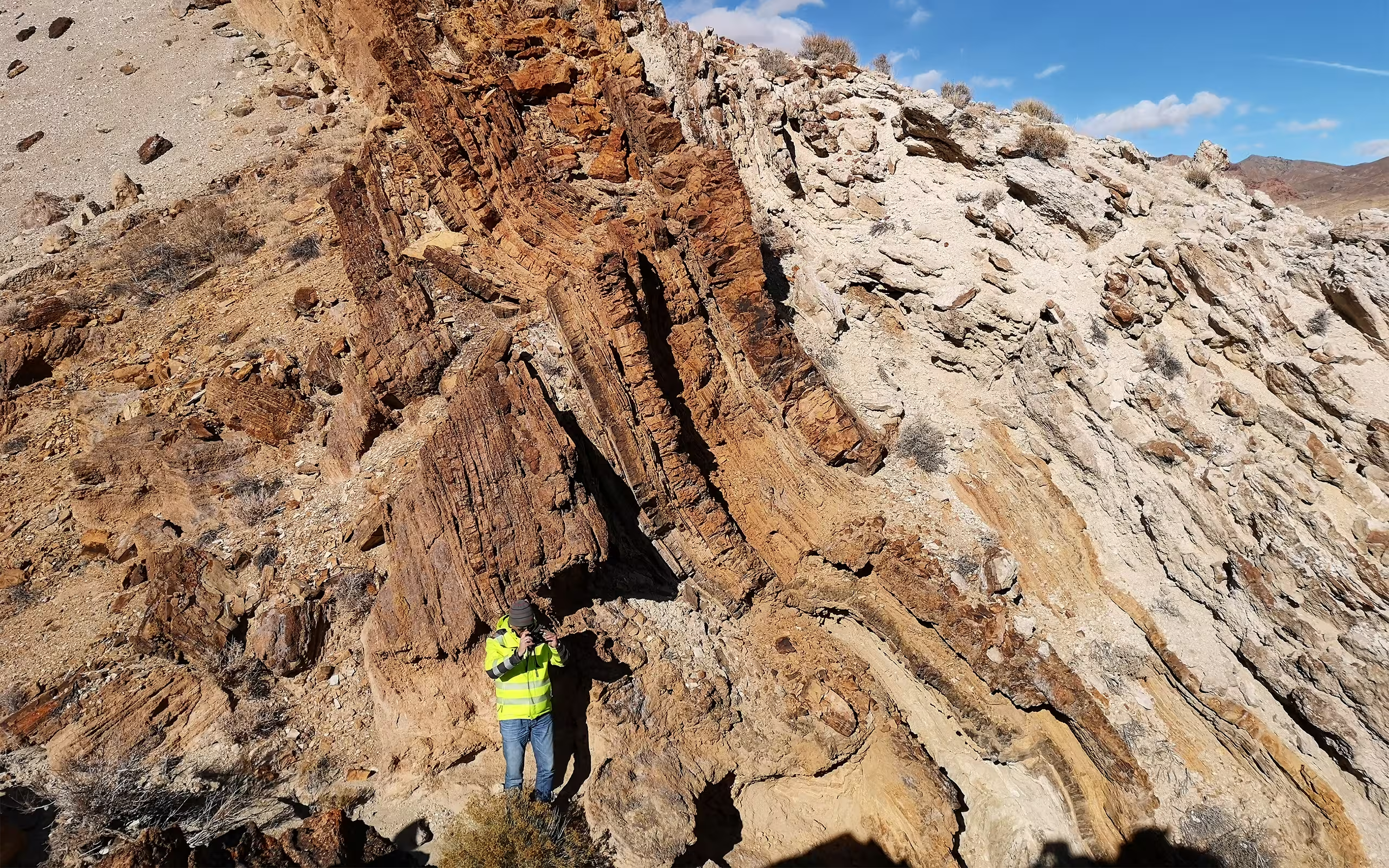
First-pass fieldwork that defines what's actually on the ground. Reconnaissance traverses, prospecting along structural and stratigraphic controls, geological mapping at the scale the programme needs, and systematic rock chip, channel, and soil sampling. Every observation and sample is georeferenced and tied to the project database from the day it's collected.
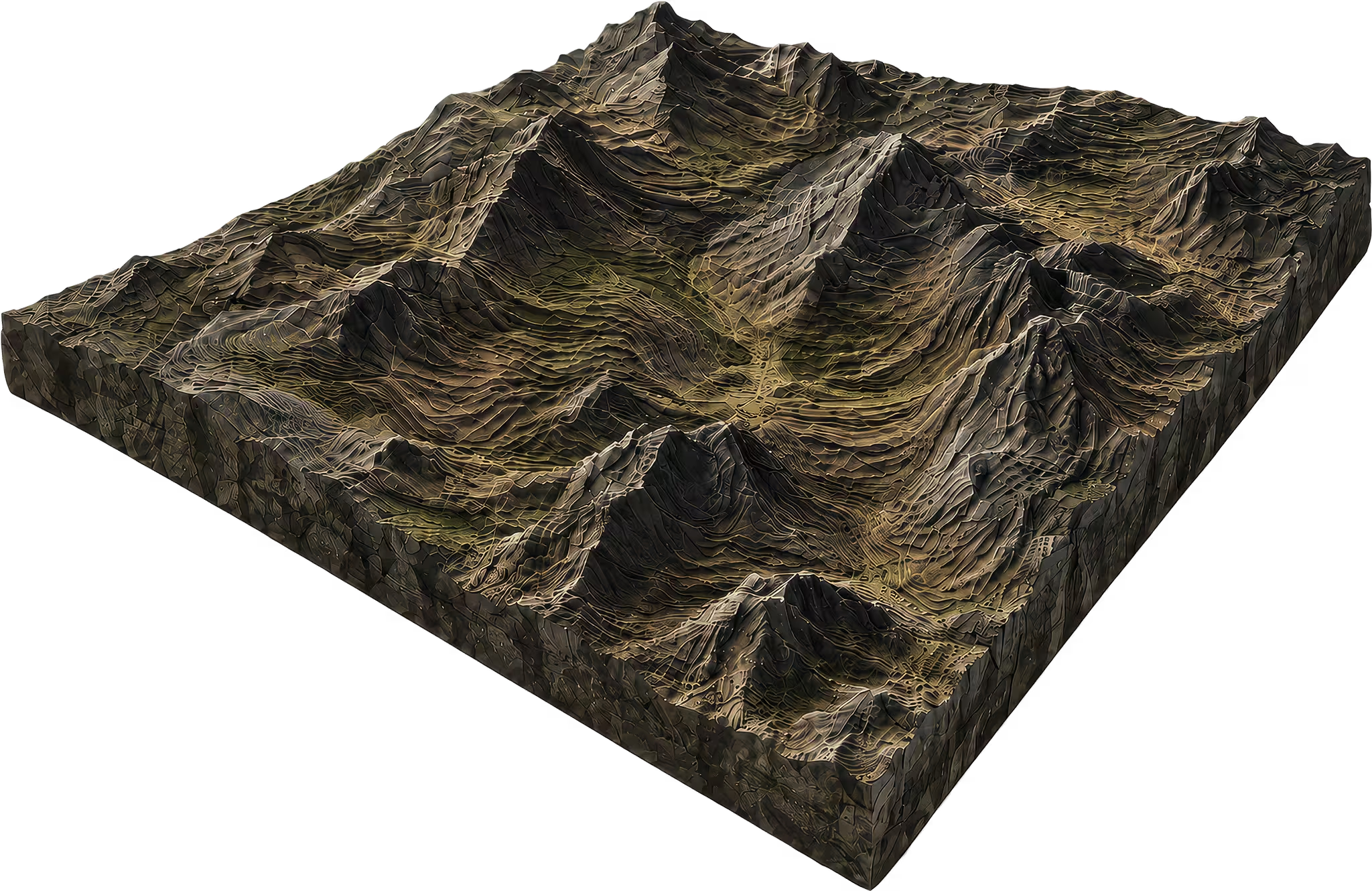
Datasets are most useful when they're read together. We integrate surface and downhole geochemistry with airborne and ground geophysics, satellite imagery, and structural interpretation, so anomalies are evaluated against the full geological picture rather than in isolation. The aim is to identify targets that survive interrogation from every angle.
Targets are ranked against style of mineralisation, supporting evidence, and the cost of testing them. Each hole is planned with a defined question to answer, expected geometry, and the minimum depth needed to give a clear result. Collars are placed to test the geological hypothesis, not the easiest access.
On-site management of the drilling campaign. Drilling supervision, geotechnical and geological core logging, structural measurement, sampling intervals defined against geology rather than fixed length, QA/QC protocols including standards, blanks, and duplicates, and sample dispatch under chain of custody. Logging is done by the geologist running the programme, not delegated.
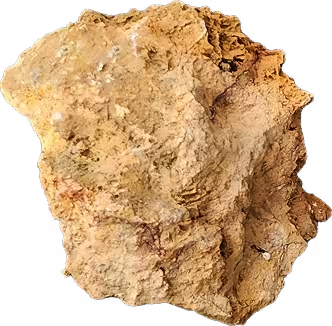
Choosing the right assay package matters more than most clients realise. We specify analytical methods, detection limits, and laboratories against the commodities being targeted and the deposit type. Multi-element packages are selected to support pathfinder analysis and alteration vectoring, not just headline grades. Lab QA/QC is monitored throughout the campaign.
A programme runs on the people in the field and the facilities they work from. We train field crews on logging codes, sampling protocols, safety procedures, and data entry. Camp and coreshed layouts are designed for efficient workflow, sample security, and core preservation, with the systems in place from day one rather than improvised under pressure.
Reporting on the cycle the programme requires. Daily field notes during drilling, weekly summaries of progress and emerging results, monthly reports for the client and the board, and technical reports prepared to NI 43-101, JORC 2012, PERC, and other CRIRSCO-aligned codes at the end of the campaign or when disclosure requires it. If something material changes, the client hears about it the day it happens.
What You Receive
What You Receive
What You Receive
What You Receive
What You Receive
What You Receive
Technical reporting that's prepared to be reviewed, audited, and signed off. Not just published.
Full programme delivery in the field. We plan, budget, mobilise, and run exploration programmes end to end, or step in to take over a campaign already underway. The geologist who scoped the work is on site when it starts and signs the report when it finishes.
Programme Planning and Budgeting
Right scope. Right spend.
Reconnaissance, Prospecting, Mapping, and Sampling
Ground truth. Better data.
Geochemistry, Geophysics, and Remote Sensing Integration
Integrated layers. Clearer signal.
Drill Target Ranking and Collar Planning
Prioritised targets. Planned with intent.
Drill Programme Support, Core Logging, and Sampling
Quality control in the field.
Analytical Method Selection
Fit-for-purpose data.
Field Crew Training, Field Camp and Coreshed Setup
Prepared teams. Efficient field operations.
Daily, Weekly, Monthly, and Technical Reporting
Transparency. Confidence. Decisions you can defend.
Senior People, On
the Ground
Accountable. Present. Accessible.
Decisions Made Against
the Geology
Context first. Data second.
Technical Record That Holds Up to Review
Complete. Traceable. Defensible.
A Programme Is Won or Lost on the Ground
Whether you need a full turnkey campaign run end to end, an existing programme taken over mid-season, or named specialists embedded in a client-led team, we deliver programmes the way they should be delivered. With senior people on site, decisions made against the geology, and a technical record that holds up to review.