Our Service

Explore

Reporting Written by the Geologists Who Know the Project

Technical reports, MRE supporting documentation, and public disclosures prepared to the CRIRSCO-aligned national codes. NI 43-101, JORC 2012, PERC, and SAMREC. Written by the geologists who understand the project, not delegated to a writer.
Discuss Your Reporting Needs
Explore

Technical Reporting

Clear, Compliant, Decision-Ready

A drill result, a sampling programme, or a resource estimate is only as useful as the document that conveys it. If a report can't be relied on by the regulator, the QP, the auditor, the financing analyst, or the next consultant who picks up the file, the underlying work is partly wasted, and the cost of redoing it sits with the issuer.

We prepare technical reports and disclosure documents that hold up at each of those checkpoints.

The work is done by geologists who have logged the rocks, sat on the rig, or rebuilt the model. Not by writers working from a brief.

Where we're not the qualified or competent person, we work in support of one, and prepare the documentation so the QP or CP can sign without rework. Where we are the QP or CP, we sign.

Discuss Your Reporting Needs

Three Common Reporting Triggers

01

A material disclosure or public announcement

Drill results, a maiden resource, a JV signing, or a change to a previously disclosed estimate. The release has to hold up under exchange and regulator scrutiny on the day it's filed, not after a clarifying notice is requested.

02

A capital raise or transaction

A financing, a listing event, or an acquisition. The technical report sits inside the disclosure package and gets read by analysts, lawyers, and the QPs of every counterparty. Anything weak in the document becomes a negotiating lever or a delay.

03

An internal handover or audit

Year-end reporting, a change of operator, a JV technical annex, or a QP review for the next stage of work. The document needs to be the kind of record someone can pick up cold in two years and rely on without re-doing the underlying work.

A Structured Process for Reliable Technical Communication

  1. Data Review and Validation

    Drilling, sampling, assay, survey, and supporting datasets are checked for internal consistency, QA/QC, chain of custody, and provenance. Standards, blanks, duplicates, and umpire labs are reviewed against expected performance. Anything that doesn't reconcile gets resolved before drafting begins. The report is built on a dataset we've verified, not on the issuer's working assumption that the data is clean.

  2. Technical Interpretation

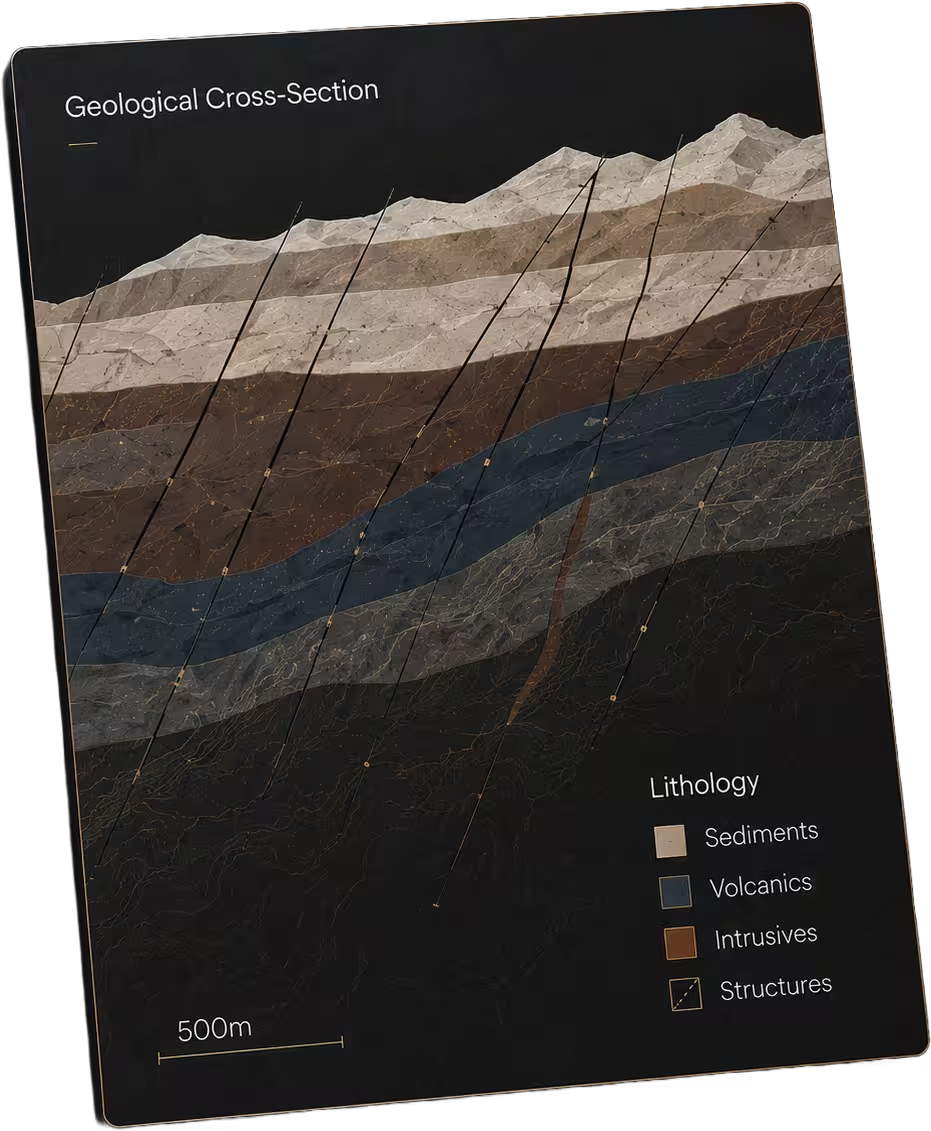
    Geological, geochemical, geophysical, and drilling results are translated into the technical narrative. Figures, sections, tables, and text are prepared together rather than retrofitted to the writing. Where modelling supports it, sections and 3D figures are built in Leapfrog or equivalent. Where assumptions are material to the conclusion, they are stated explicitly so the reader can test them.

  3. Code Alignment

    Documents are drafted to NI 43-101, JORC 2012, PERC, or SAMREC as applicable, including all required disclosures, QA/QC tables, sampling procedure documentation, and material assumption sections. Each section is mapped to the specific clause it satisfies. We work with the QP or CP directly on sign-off requirements, so the document the geologist signs is the document the regulator reads.

  4. Presentation and Audience Calibration

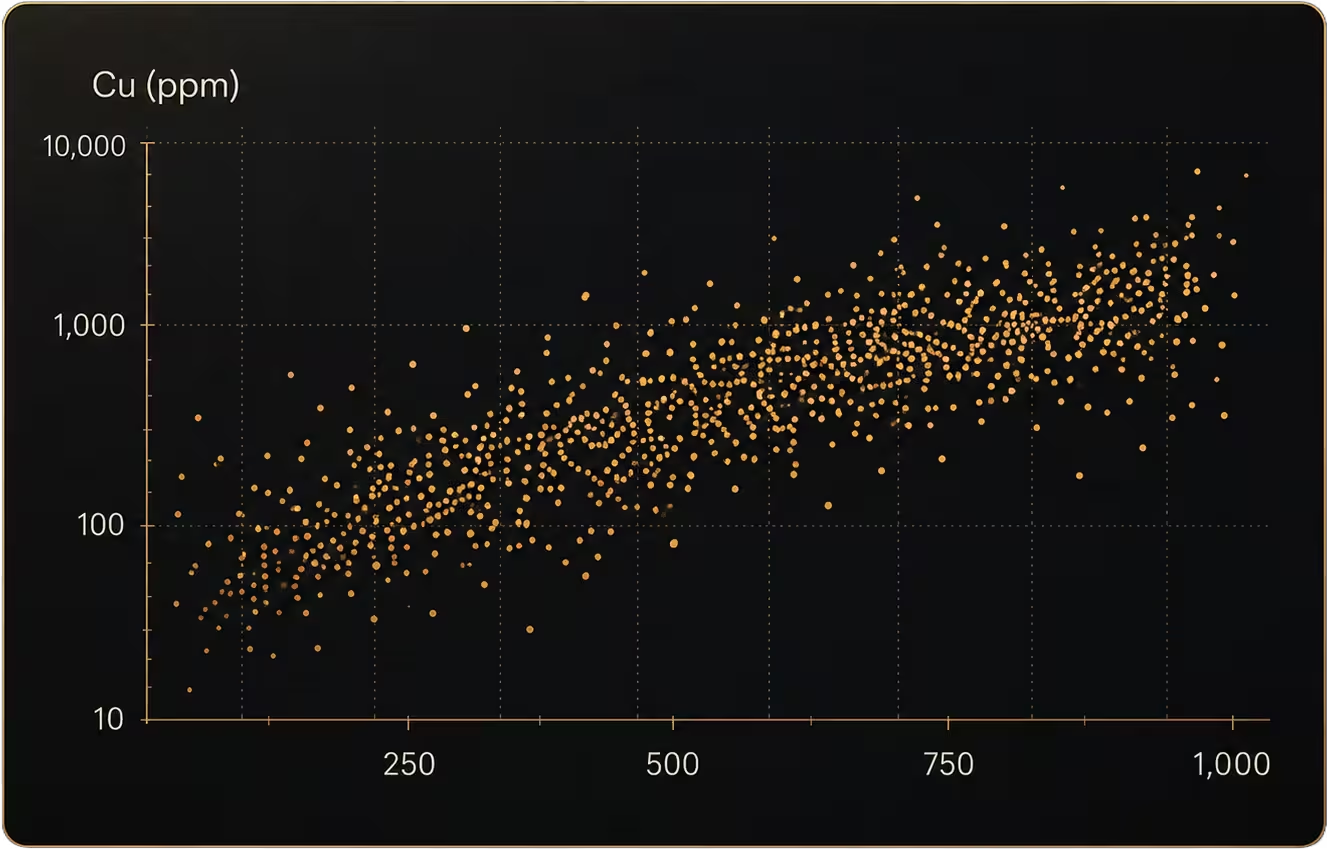
    The same dataset reads differently for a regulator, a QP, a financing analyst, and a non-technical board member. We write the document the audience actually requires. Technical sections in full technical language. Plain-English summaries where the audience requires them. Visualisation that supports the narrative rather than decorating it.

What You Receive

What You Receive

What You Receive

What You Receive

What You Receive

What You Receive

What You Receive

Technical reporting that's prepared to be reviewed, audited, and signed off. Not just published.

01

Independent or supporting technical reports

Prepared to NI 43-101, JORC 2012, PERC, SAMREC, or equivalent CRIRSCO-aligned codes. Standalone documents covering geology, exploration history, sampling, QA/QC, interpretation, and recommendations.

02

MRE supporting documentation

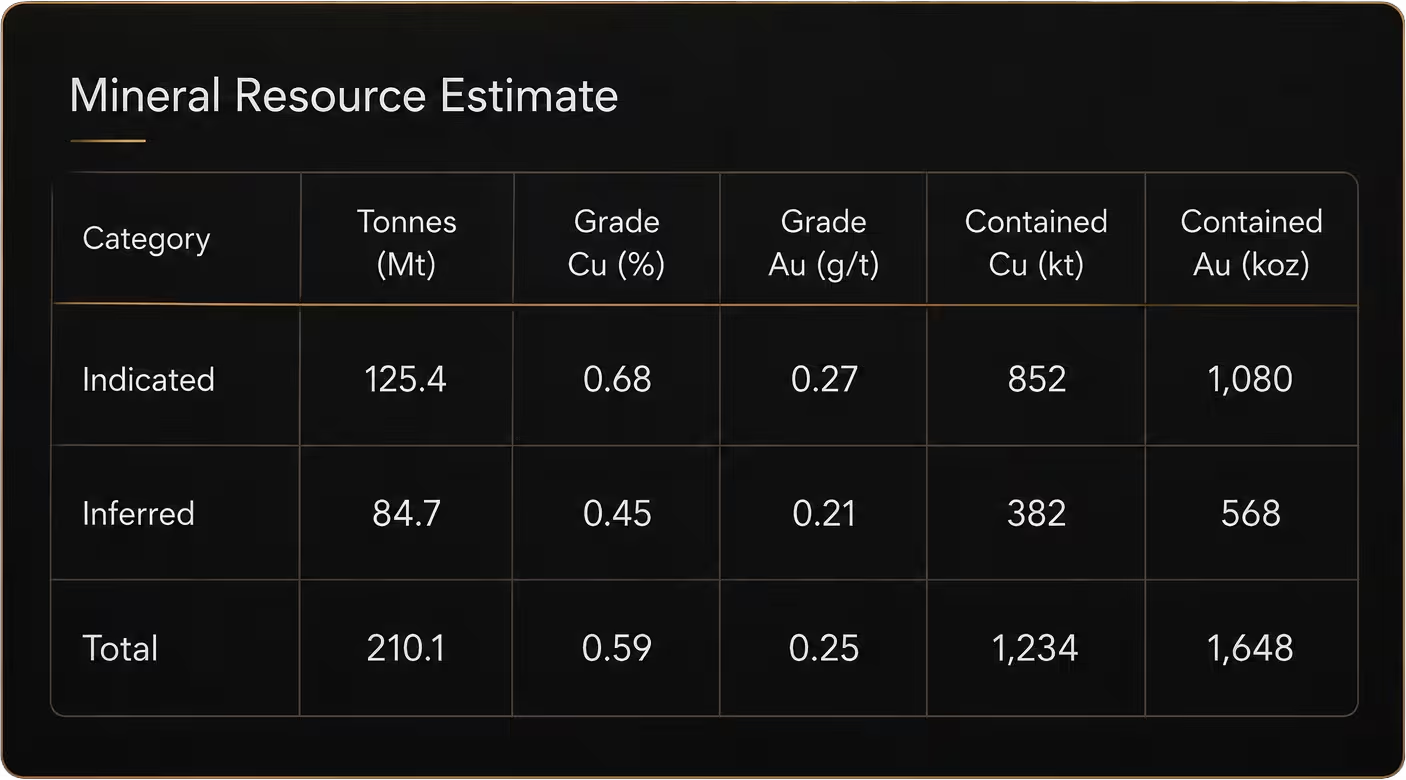
Where the report supports a Mineral Resource Estimate, the underlying technical record, including methodology, classification rationale, validation, and material assumption documentation, prepared to QP or CP sign-off standard.

03

Public disclosure and material news drafts

Drill result releases, resource update announcements, JV announcements, and other material disclosures, drafted to satisfy exchange and regulator requirements on the day of filing.

04

Investor-facing technical materials

Project summaries, presentation figures, and corporate deck content, prepared for analyst briefings, financing roadshows, and partner discussions. Technically defensible, not just commercially appealing.

05

Logged technical record

Documentation built so a subsequent QP, auditor, or in-house team can pick up the file cold and rely on it. The report is the start of the audit trail, not the end of it.

From Exploration Results to Reliable Reporting

Technical reporting isn't documentation. It's the process of turning complex results into clear, structured, and compliant communication that can stand independent review.

01

Inputs

Geology. Geophysics. Geochemistry. Drilling. Sampling. Modelling.

02

The work in between

Validation. Interpretation. Code alignment. Audience calibration.

03

Outputs

Technical reports. MRE documentation. Press releases. Announcements. Investor materials. Data visualisation.

Three things every output has to be

Compliant

Aligned with the relevant CRIRSCO code and the disclosure jurisdiction.

Clear

Complex data translated into structured, defensible reporting.

Credible

Built so a QP, an auditor, a regulator, and an analyst can rely on it.

Reporting That Won't
Need Rewriting

Whether the document is for a TSX-V quarterly, an ASX resource update, a private financing memo, a JV technical annex, or a regulator-facing disclosure, we prepare it once, to standard, and we work with your QP or CP to make sure it's signed without rework.

Discuss Your Reporting Needs